


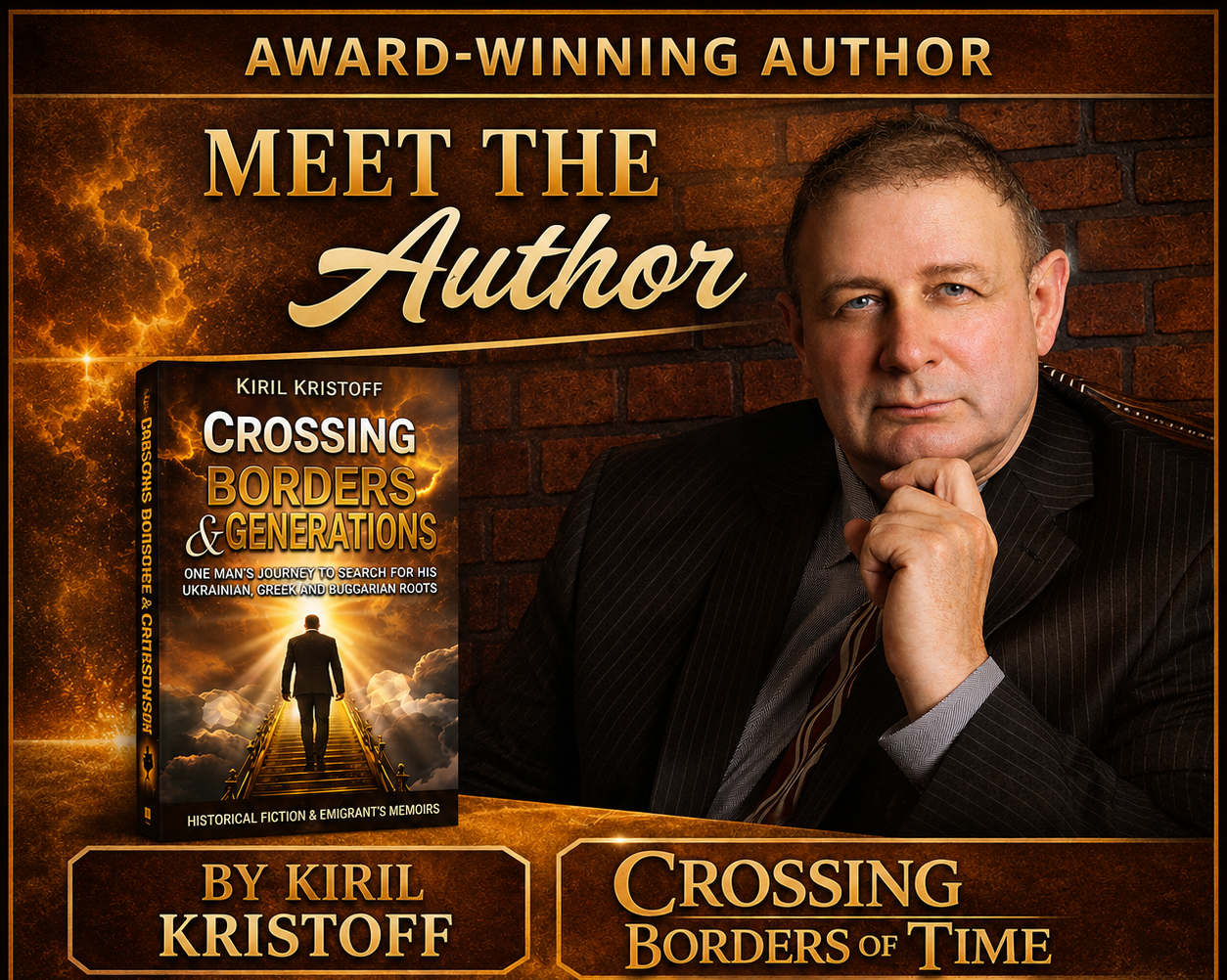
In a time when conversations around identity, faith, and cultural heritage are more important than ever, Kiril Kristoff delivers a compelling and deeply personal narrative through his book, Crossing Borders & Generations. More than a historical novel, the book is a moving exploration of immigration, faith under persecution, generational legacy, and the enduring strength of the human spirit.
At the center of the story is a powerful reminder: understanding where you come from is essential to understanding who you are.
Born in Bulgaria and now a resident of New Jersey for more than 35 years, Kiril Kristoff’s journey is one shaped by perseverance, survival, and unwavering faith. While he built a successful career as a licensed physical therapist and acupuncturist with a postgraduate degree in Oriental Medicine from the Tri-State College of Acupuncture, it was the stories of his family and his experiences living under Communism that ultimately compelled him to become an author.
His book, Crossing Borders & Generations, draws heavily from those lived experiences. Through a multi-generational narrative, Kristoff takes readers across borders, cultures, and timelines, weaving together themes of heritage, identity, sacrifice, and spiritual resilience. The story explores how the decisions and struggles of one generation continue to shape the lives of those who follow.
What makes this book especially impactful is the authenticity behind it. Before immigrating to the United States, Kiril and his wife Vessy worshiped secretly in the Underground Church in Sofia, Bulgaria, during a time when practicing Christianity under Communist rule came with dangerous consequences. Pastors were arrested, Bibles were confiscated, and believers often gathered in fear and secrecy. Yet despite the oppression surrounding them, their faith remained unshaken.
These experiences became the emotional and spiritual foundation for Crossing Borders & Generations. Rather than simply telling a story, Kristoff preserves an important part of history that many people today may never fully understand. His writing gives voice to believers who worshiped in silence, families who endured persecution, and immigrants who left everything familiar behind in pursuit of freedom and hope.
The novel explores more than political oppression or immigration. At its heart, it is about generational legacy. Kristoff masterfully illustrates how trauma, faith, sacrifice, and perseverance travel through generations, shaping both identity and purpose. Through vivid storytelling and emotional depth, readers are invited to reflect on their own family histories and the invisible threads connecting past and present.
One of the most compelling aspects of the book is its exploration of faith during hardship. In today’s world, where faith is often treated casually or culturally, Kristoff offers a perspective forged under pressure. His lived experiences inside the Underground Church give the book a level of realism and emotional gravity that cannot be manufactured. His story is not theoretical—it is deeply personal.
That authenticity is also what makes his voice so unique. Known as “The Voice of the Underground Church in Bulgaria,” Kristoff writes not merely as an observer of history, but as someone who survived it. His words carry the weight of lived truth, making his message especially powerful for readers seeking stories rooted in courage, conviction, and resilience.
Beyond the pages of the book, Kristoff’s mission continues to expand. He is currently working to adapt his trilogy into Hollywood screenplays and faith-inspired films that will bring these stories to a broader audience. His upcoming project, Gold Through the Fire, has already been submitted to Angel Studios for consideration as a historical faith-based adaptation. He is also developing a documentary focused on underground Christian movements in Communist Bulgaria and the intergenerational impact of trauma and faith.
These projects reflect Kristoff’s larger purpose: awakening people to the realities of religious persecution, preserving stories of survival, and encouraging readers and audiences to protect their faith and understand their heritage.
What truly sets Crossing Borders & Generations apart is its ability to resonate with multiple audiences. For immigrants, the story reflects the emotional realities of leaving one life behind to build another. For believers, it serves as a testimony of faith under fire. For younger generations, it becomes an important reminder that freedom and identity often come at a great cost.
The book also carries a timely message in today’s global climate. In a fast-moving world where many people feel disconnected from history, family roots, and spiritual foundations, Kristoff reminds readers that heritage matters. Stories matter. Faith matters. And the sacrifices of previous generations should never be forgotten.
Ultimately, Crossing Borders & Generations is more than a historical narrative, it is a testimony of survival, a tribute to resilience, and a celebration of faith that refused to be silenced.
Through this powerful work, Kiril Kristoff is not only preserving history; he is ensuring that future generations understand the importance of courage, identity, and standing firm in what you believe, even in the face of unimaginable opposition.